Culture: Trace the Urban Image
Where does a street photograph live after the shutter clicks? Increasingly, photographers are stepping off algorithmic feeds and returning to tactile risograph zines, sequenced gallery walls, and patient multi-year neighborhood archives.
Start a Photo Walk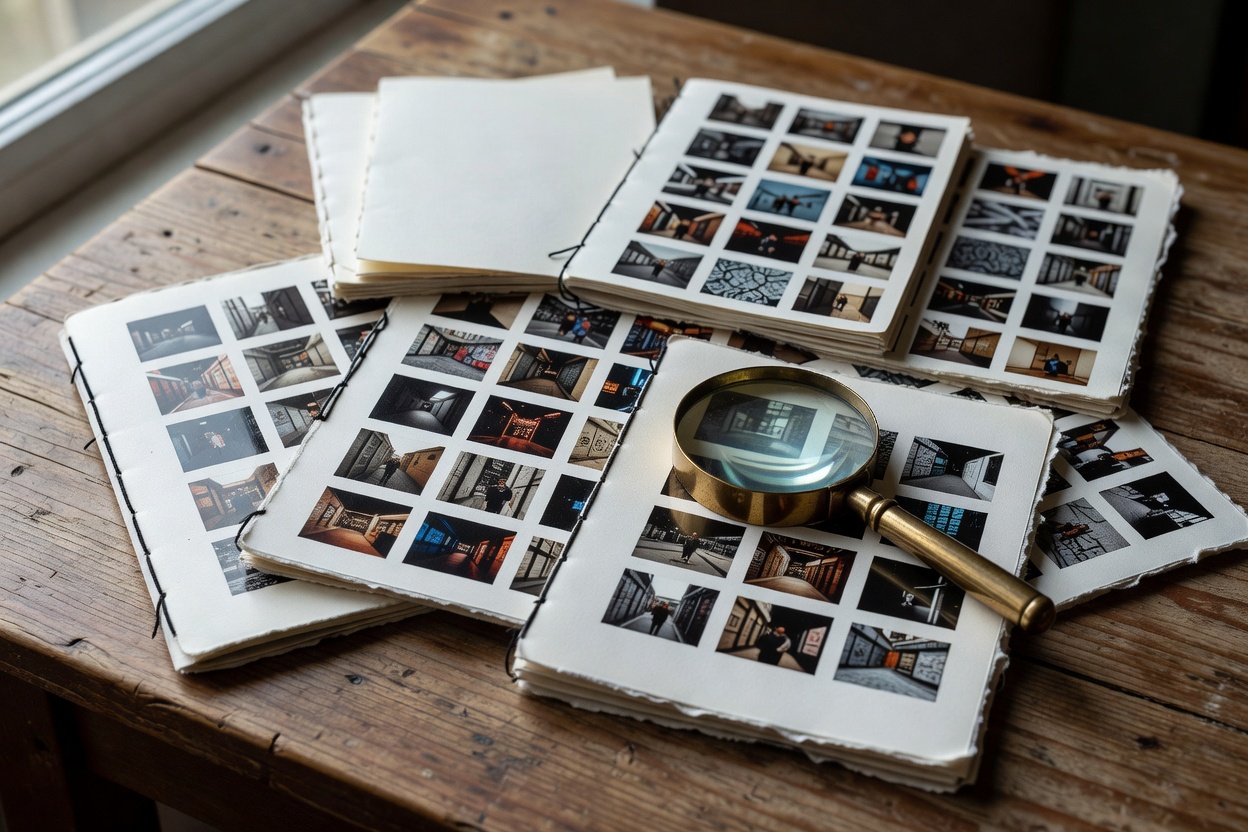
From Single Frames to Tactile Photobooks
For over a decade, digital platforms conditioned street photographers to chase loud, isolated one-liners—images engineered to register in half a second on a phone screen. In 2026, the most vital work in contemporary urban visual culture pushes in the opposite direction. Inspired by classic photobook landmarks such as Robert Frank's The Americans, William Klein's Life is Good & Good for You in New York, and Luigi Ghirri's quiet Italian typologies, emerging practitioners are thinking in chapters and sequences.
In a well-edited sequence, a quiet close-up of rain on a zinc counter sets the emotional tempo for the bus-stop gesture on the facing page. Independent risograph collectives from Peckham to Tokyo's Jinbocho book district are printing run-of-200 zines on uncoated cotton paper, proving that three dozen modest, deeply observed neighborhood frames tell a richer truth than a single viral spectacle.
2026 Exhibitions & Archival Institutions
Visiting photography institutions in person trains your eye in scale, paper texture, and tonal transition in ways no backlit monitor can replicate. Below are key curatorial programmes and archives championing urban observation this season:
The Photographers' Gallery — London (Ramillies Street, Soho)
International Center of Photography (ICP) — New York (Lower East Side)
Fondation Henri Cartier-Bresson — Paris (Rue des Archives)
Foam Fotografiemuseum — Amsterdam (Keizersgracht)
Slow Walks, Hyper-Local Archives, and Tactile Grain
Three distinct currents are shaping emerging street work today. First is the One-Kilometer Archive: rather than flying to unfamiliar capitals for weekend photo safaris, photographers spend two full years walking the exact same eight blocks around their home or workplace, documenting how seasonal light and subtle civic renovations transform familiar corners.
Second is Abstracted Urban Materiality—frames that zoom in on peeling poster strata, wet asphalt reflections, and architectural seams until the city resembles an abstract canvas. Third is Intentional Slow-Shutter Rhythm, using 1/8th or 1/15th of a second to turn passing trams and umbrellas into painterly streaks anchored by a single sharp architectural edge.
Have a neighborhood observation or exhibition note of your own? Head to our reader desk to compile and share your field dispatch.
Share an Urban Observation